Microsoft Turns Copilot Into a Super App, and Aims It Straight at Anthropic and OpenAI
Microsoft stopped trying to out-chatbot ChatGPT. Instead, it folded Word, Excel, and PowerPoint into Copilot and let employees pick their own AI model underneath.
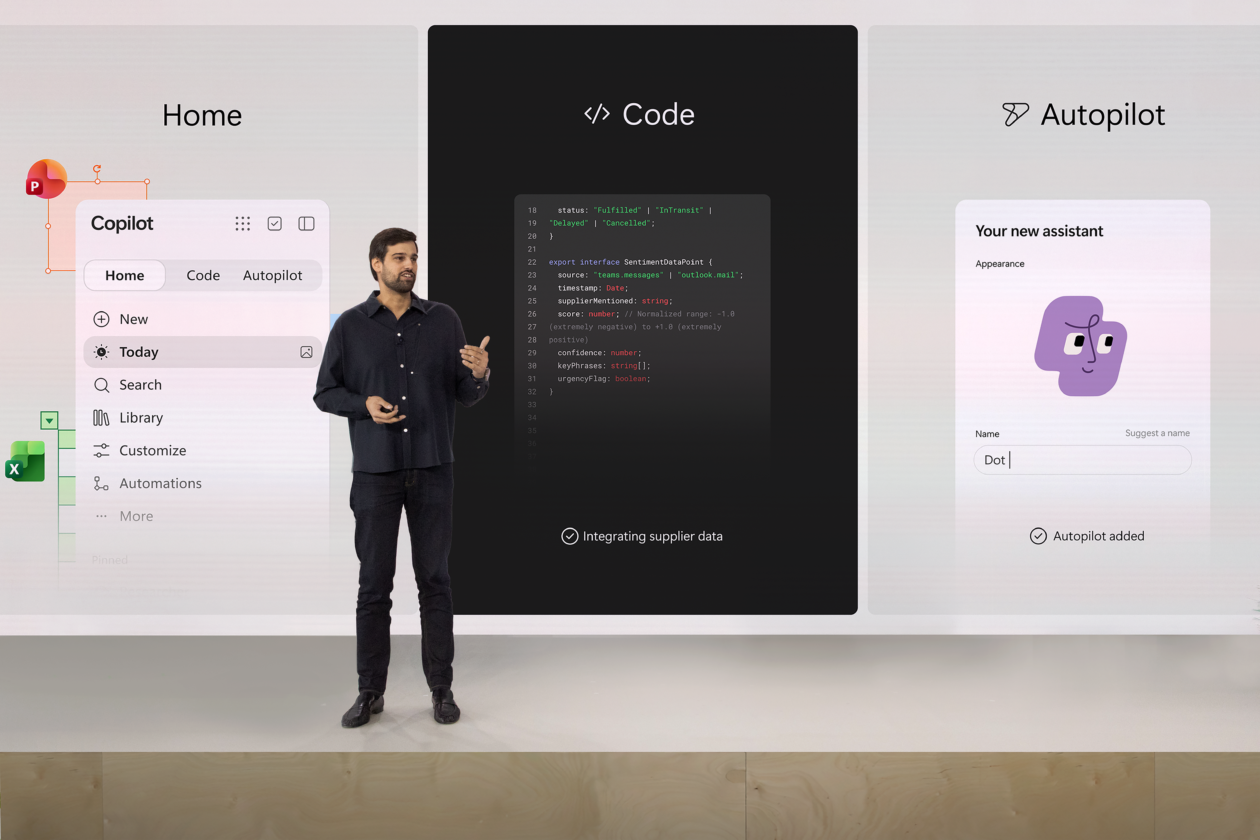
Microsoft is done pretending Copilot is a personal chatbot fighting OpenAI's ChatGPT for casual users. On Thursday, the company unveiled a rebuilt, unified Copilot app built around three modes: Home, for conversational AI and its Cowork agent; Code, for building software from a plain-English description; and Autopilot, for spinning up always-on agents that run in the background of someone's job. Full versions of Word, Excel, and PowerPoint now live inside the app itself, so users never have to leave it to get work done.
The bigger move is underneath the hood. CEO Satya Nadella framed the redesign around model independence, telling reporters, "My test of true independence going forward is for you to have a private eval that you can hill climb on and substitute a model." In practice, that means IT departments can toggle between GPT, Anthropic's Claude Opus, and Microsoft's own MAI models inside the same interface, a direct shot at both rivals' walled gardens. It is also a bet that enterprises trust Microsoft's existing IT relationships more than they trust a startup's app, even as EVP Jacob Andreou admitted the autonomy that makes agents useful is "the same thing that makes them absolutely terrifying to an IT admin."
Pricing is shifting too: usage-based billing for the heavier Cowork, Code, and Autopilot features, layered on top of Microsoft's existing per-user Copilot licenses. The subtext is a company that has decided it cannot win the "best chatbot" argument, so it is making a different one: whichever model you trust, Microsoft wants to be the app you run it in.
Kyle Duford, Founder & Editor, BRNDWIRE. More from Kyle →