Singles' Day Is the Biggest Shopping Day on Earth, and America Still Can't Decide What to Do With It
What started as a Nanjing University joke about four lonely digits became the largest shopping event on the planet. Here's why it still has not cracked the US, and why it is awkwardly sharing a date with Veterans Day.
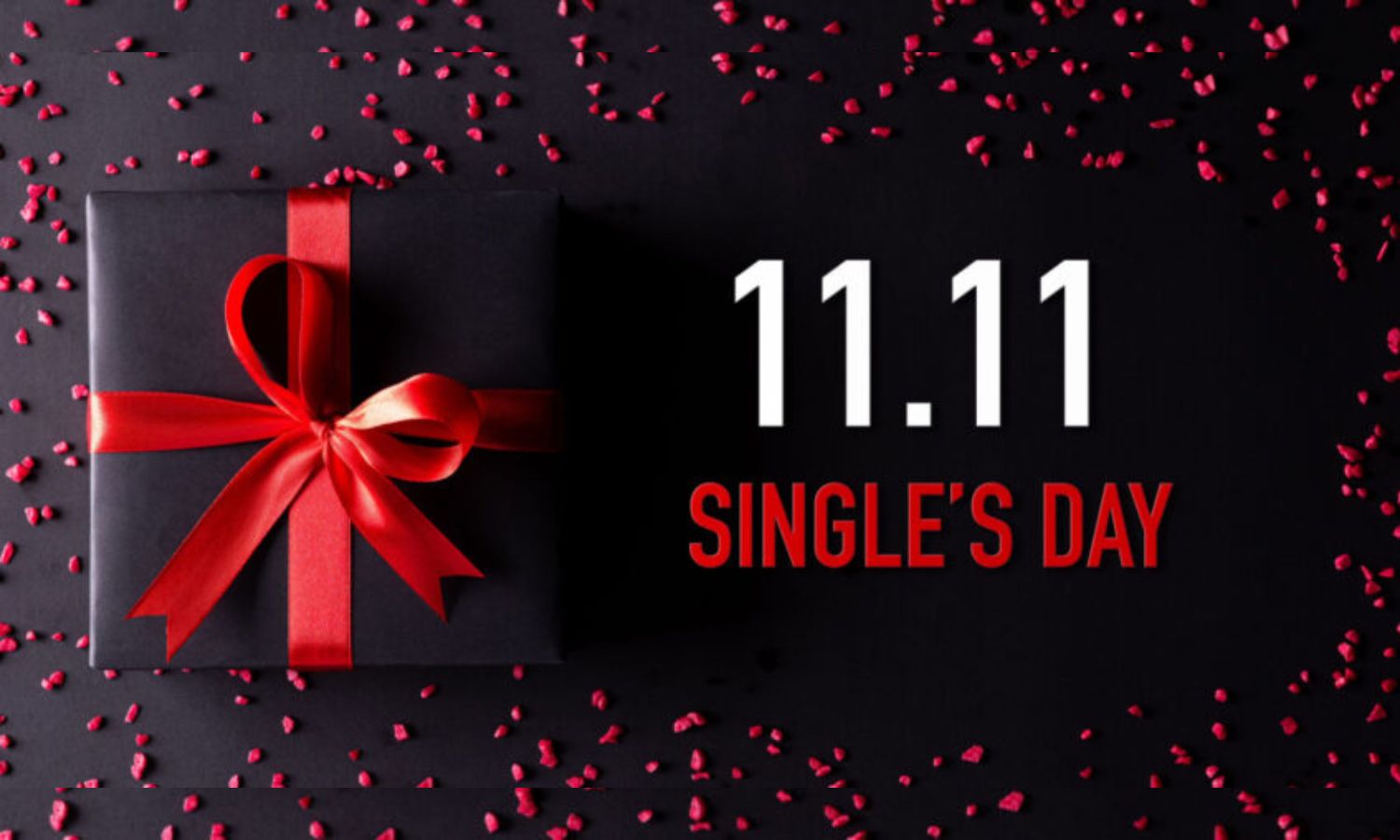
Singles' Day started as a joke on four lonely digits. On November 11, 1993, a group of male students at Nanjing University decided that four 1's in a row, 11/11, looked exactly like four single people standing side by side, and declared it "Guanggun Jie," or Bachelors' Day. It was an inside joke on a Chinese campus, a counter-Valentine's for people without a date, nothing more.
Then Alibaba found it. In 2009, with Taobao and Tmall sales sagging and Jack Ma looking for a reason to manufacture demand, Alibaba staged a one-day "11.11" sale built directly on the bachelor-joke date, on the logic that single people treat themselves when nobody else will. Twenty-seven brands participated that first year. Within a decade, Singles' Day had become the largest shopping event on Earth, outselling Black Friday and Cyber Monday combined by a wide multiple, driven by livestream hosts selling lipstick to millions of viewers at a time and flash deals that reset every hour. The growth has cooled as China's consumer economy matures, this year's reported gains were in the low double digits, well off the 20-plus percent years, but it remains, by a mile, the biggest twenty-four hours in global retail.
Outside China, Singles' Day's footprint is almost entirely Alibaba-shaped. AliExpress has pushed the event into roughly twenty countries, with Southeast Asia, Shopee and Lazada's home turf of Singapore, Indonesia, and the Philippines, standing as the next-biggest stage after China itself, followed by pockets of Eastern Europe and Latin America where AliExpress does meaningful cross-border volume.
In the US, Singles' Day has never found its footing, and the reason is structural, not cultural. It is not a holiday Americans grew up with, it carries no retail folklore, and it lands roughly two weeks before most people start thinking about Black Friday. What US adoption exists skews toward two groups: Chinese-American shoppers who grew up with Double 11 and still shop Tmall or AliExpress out of habit, and younger, deal-literate shoppers who discovered the date through Shein, Temu, or TikTok rather than through Alibaba at all. For most brands, Singles' Day in the US functions as a test flight, not a destination; retail analysts have called it a litmus test for Black Friday, a low-stakes chance to see which products move before committing real inventory to the real holiday.
That points to the deeper split: Singles' Day is an e-commerce holiday wearing a shopping-holiday costume, not a retail one. It was built for apps, livestreams, and one-click checkout, not for store traffic, and almost nothing about it translates to a physical floor. US brands that participate do it entirely through email, SMS, and site banners, not window displays or in-store signage, which is exactly where a tool like brndwchr earns its keep, it's built to catch a brand send the moment it lands, Singles' Day included.
Consistently, this year, the Singles' Day emails going out belong to fashion and beauty, not big-box retail:
- ASOS (up to 40% off)
- AllSaints (22% off)
- Karen Millen (around 45% off)
- Alo Yoga (30% off, gated behind a free membership sign-up)
- MAC Cosmetics (25% off, plus a gift with purchase for US shoppers)
- Lovehoney (an extra 11% off, because of course).
It's the same cast that has shown up for years:
- Uniqlo pricing items down to $11.11
- J.Crew running an 11/11 flash sale
- Levi's
- Fresh leaning on round-number discounts and gift-with-purchase math that photographs well in a promo email.
Fifteen American brands, including Nike, Gap, Levi's, The North Face, and Under Armour, have each cleared a billion dollars in Singles' Day revenue in China alone, which is the real reason US marketing teams keep a hand in this: not the domestic sale, but the audience on the other side of it.
Then there's the date problem nobody designed on purpose. Singles' Day and Veterans Day both land on November 11, and they run on opposite instincts. Veterans Day marketing guidance for 2026 is almost uniformly about restraint: lead with gratitude, verify eligibility quietly, and don't dress a military holiday up as a sale. Singles' Day is that instinct inverted and turned up to eleven, four of them, actually, treat-yourself math blasted at full volume. Most brands solve the collision by simply running two separate calendars that happen to share a date: a quiet, discount-coded veteran offer in one email, and a loud "11.11" subject line in another, sent to a different list, with no acknowledgment that both landed in the same inbox on the same morning. Nobody has cracked a version that does both honestly, and based on what's hitting inboxes this year, nobody's really trying.
Source: Glossy
Kyle Duford, Founder & Editor, BRNDWIRE. More from Kyle →
The Brand Briefing
Liked this? Get five more every morning.
The Brand Briefing: the stories moving brands, in your inbox at 7am your time. Free.