Scarlett Johansson's Skincare Brand Closes, and Turning Down Estee Lauder Couldn't Save It
The Outset built itself specifically to avoid the usual celebrity-brand trap, equity instead of a licensing check, and shut down after four and a half years anyway.
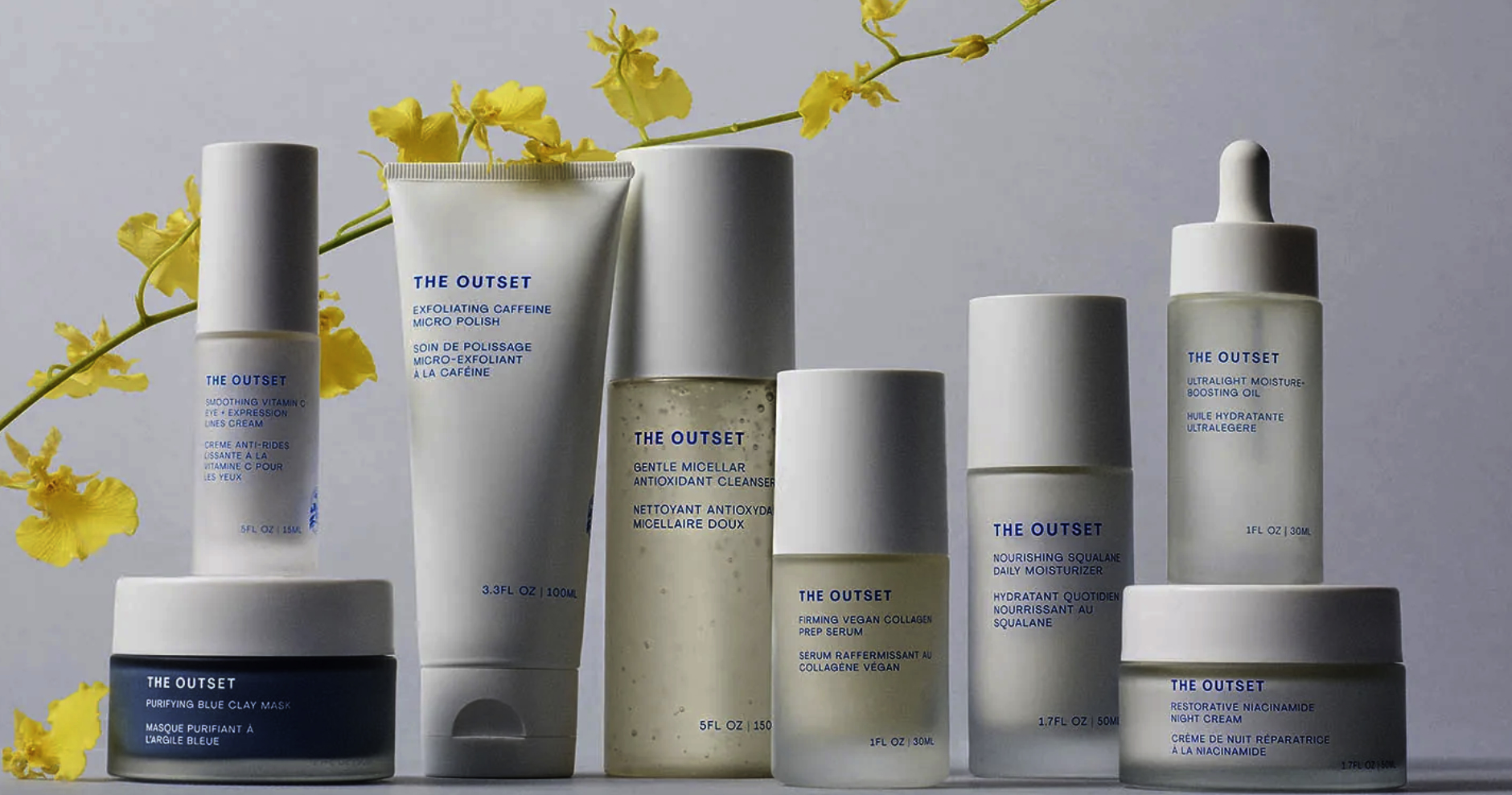
The Outset is done. Scarlett Johansson's skincare line announced on September 29 that it was winding down, posting the kind of statement every shuttered DTC brand eventually posts: "After an incredible journey, The Outset has made the decision to wind down operations. We're so grateful to everyone who welcomed us into their routines and supported us along the way." Online ordering stopped immediately, existing orders will still ship, and the brand spent its final weeks discounting up to 50% off, which is usually the tell that a closure announcement is coming before the brand says so itself. The timeline lands at four and a half years, launched March 1, 2022, closed September 2026.
What made The Outset different, on paper, was the deal behind it. After Disney settled her Black Widow lawsuit in 2021, Johansson turned down brand offers from both Shiseido and Estee Lauder, the two most obvious paths for a famous face who wants a beauty line with none of the operational headache. She said no to both because neither offered real equity or control, just a licensing arrangement with her name on the label. Instead she partnered with Kate Foster Lengyel, who had already built and sold SwearBy to Meredith Corporation, and took backing from The Najafi Companies, Beliade, and Plus Capital, raising somewhere between $5 million and $10 million. The resulting product was genuinely differentiated too: five launch SKUs priced $32 to $54, a self-imposed ban on more than 2,700 ingredients, roughly double the industry's usual cutoff, and a proprietary plant-based hyaluronic acid substitute called Hylauroset that nobody else was using.
For a while it worked the way it was supposed to. The Outset rolled into 500 Sephora doors within a month of launch, then expanded into Amazon, Credo, Cult Beauty, Goop, Nordstrom, QVC, Revolve, and Shopbop, growing the line to roughly 14 products. Industry estimates put first-year retail sales near $10 million, and later estimates from Charm.io had 2025 revenue somewhere between $10 million and $25 million, respectable numbers for an indie skincare brand that never chased a celebrity-name shortcut. But the brand quietly exited Sephora at some point along the way, and Foster Lengyel, the operator who gave The Outset its actual business infrastructure, left the CEO role in April 2025. A beauty brand built around having real operational leadership does not survive losing that leadership for long, and eighteen months later it hasn't.
The Outset is also just the latest name on a list that keeps growing. Gwen Stefani's Gxve Beauty, Drew Barrymore's Flower Beauty, and Kate Moss's Cosmoss have all shut down recently too, and the pattern is consistent enough that branding academics have started naming it out loud. Marketing professor Vishag Badrinarayanan put it plainly: "an existing fan base for a celebrity does not automatically mean a readily available group of customers." Columbia Business School's JP Kuehlwein was blunter, comparing celebrity CPG ventures to "GMO fruits and vegetables," attractive on the shelf, disappointing once you actually live with them, and he blamed a private-equity-fueled category that prizes a fast exit over a durable brand. It is not a universal rule. Tracee Ellis Ross's Pattern is still standing, and Shay Mitchell's Beis sold for $178.5 million, so celebrity involvement is not automatically disqualifying.
Which is the uncomfortable part of this particular closure. The Outset did almost everything the branding playbook says a celebrity founder should do: real equity instead of a licensing fee, an experienced operating partner instead of a famous name running the business solo, a genuinely formulated product instead of a rebadged white-label serum. It still closed. Equity and control decide who captures the upside if a brand works. They do not manufacture the upside in the first place, and that is the part Johansson's deal structure was never actually built to fix.
Source: Beauty Independent
Kyle Duford, Founder & Editor, BRNDWIRE. More from Kyle →