
Sprout Is a Great Hack. Is It a Brand?
A drop-in motherboard that resurrects old iPods is one of the smartest hardware ideas in years. The brand wrapped around it hasn't decided what it wants to be yet.
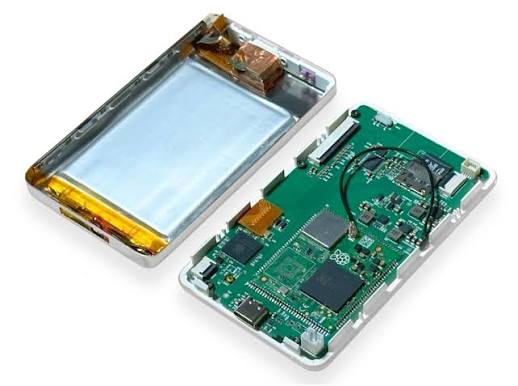
What Sprout Actually Is
Certain Things makes a drop-in motherboard called Sprout that turns a dead iPod mini, 3rd-gen, or 4th-gen into a modern streaming device. You keep the original shell, screen, click wheel, and buttons. You swap the guts: a Raspberry Pi-based board with Bluetooth, Wi-Fi, a proper Hi-Fi DAC, USB-C, and (on the higher-end Pi version) Spotify and Apple Music. No soldering. Fully reversible.
That last word is the whole pitch, and most people writing about this thing will miss it. Sprout isn't selling you nostalgia as an aesthetic, the way a hundred retro-styled Bluetooth speakers do. It's selling you nostalgia as hardware you can physically act on, undo, and act on again. That's a different, and much harder, promise to make.
What They Get Right
Two decisions carry this entire brand, and neither one is the DAC chip.
First, reversibility. Every retro-mod company on Etsy will sell you a "restored" iPod, usually meaning they gutted it and you'll never get the original board back. Certain Things built the swap to undo itself. That's not a technical footnote, it's the trust signal: we are not asking you to destroy the thing you love in order to use it. For an audience this attached to the original object, that single design constraint does more brand work than any tagline could.
Second, the name. "Sprout" is a small, green, living thing pushing up out of something that looks finished and dead. That's exactly what's happening inside the shell. Most hardware brands name the feature (DAC, chip, generation number). This one named the feeling, and got it right on the first try.
The Real Archetype at Work
The spec sheet reads like a Maker brand: Raspberry Pi internals, a hackable Linux base, GPIO pins repurposed from the old remote connector. But the emotional sell underneath it is pure Outlaw. Every line on that page is a quiet argument that Apple was wrong to let this hardware die, and that you, with a screwdriver and forty minutes, get to overrule that decision.
Right-to-repair and anti-planned-obsolescence sentiment has been building in tech culture for a decade, and almost nobody has turned it into a product this specific and this satisfying to hold. Sprout doesn't say any of that out loud. It doesn't need to. The product does the arguing for them, which is exactly how an Outlaw brand should behave: show the rebellion, don't narrate it.
Where It's Exposed
Three problems, in order of how much they'll actually hurt.
"Certain Things" the studio has no story anywhere on this page. No founder, no face, no why. Just a YouTube channel, a Reddit account, and a contact email. For a product this personal, that's a gap, not a minimalist flex. People don't just want the board, they want to know who's still going to be answering email in three years.
"Sprout" the name is already crowded. It's a wellness app, a budgeting app, a baby brand, a plant-care startup, and now a motherboard, all competing for the same word. A great metaphor stops being an asset the moment five other categories own it too.
And the whole operation leans on Crowd Supply and enthusiast goodwill instead of a channel it owns. That's a fine way to launch. It's a bad way to still exist in 2029, when this same community has moved on to the next cult object and nobody but Reddit remembers Sprout existed.
The Verdict
Sprout is a genuinely excellent product wearing a brand that hasn't decided what it wants to be when it grows up. Right now it reads like a cult object: beloved by the people who already found it, invisible to everyone else, and entirely dependent on Reddit threads and a crowdfunding page to keep existing. That's a fine way to spend year one. It is not a strategy.
If Certain Things wants Sprout to still matter in five years, they need to pick a lane: either lean all the way into cult-object status, with a founder's face, a real story, and a direct line to the community that's carrying them right now, or grow up into an actual company with owned distribution and a name that isn't fighting four other industries for search results.
The hardware already made its argument. The brand hasn't made its decision yet.
Source: Certain Things
Kyle Duford, Founder & Editor, BRNDWIRE. More from Kyle →
The Brand Briefing
Liked this? Get five more every morning.
The Brand Briefing: the stories moving brands, in your inbox at 7am your time. Free.